← Foresights · April 2026
Technology Signal
The Death of the App
Why the next decade of computing produces fewer applications and more autonomous systems, and what replaces the interface entirely.
Why the next decade of computing produces fewer applications and more autonomous systems, and what replaces the interface entirely.
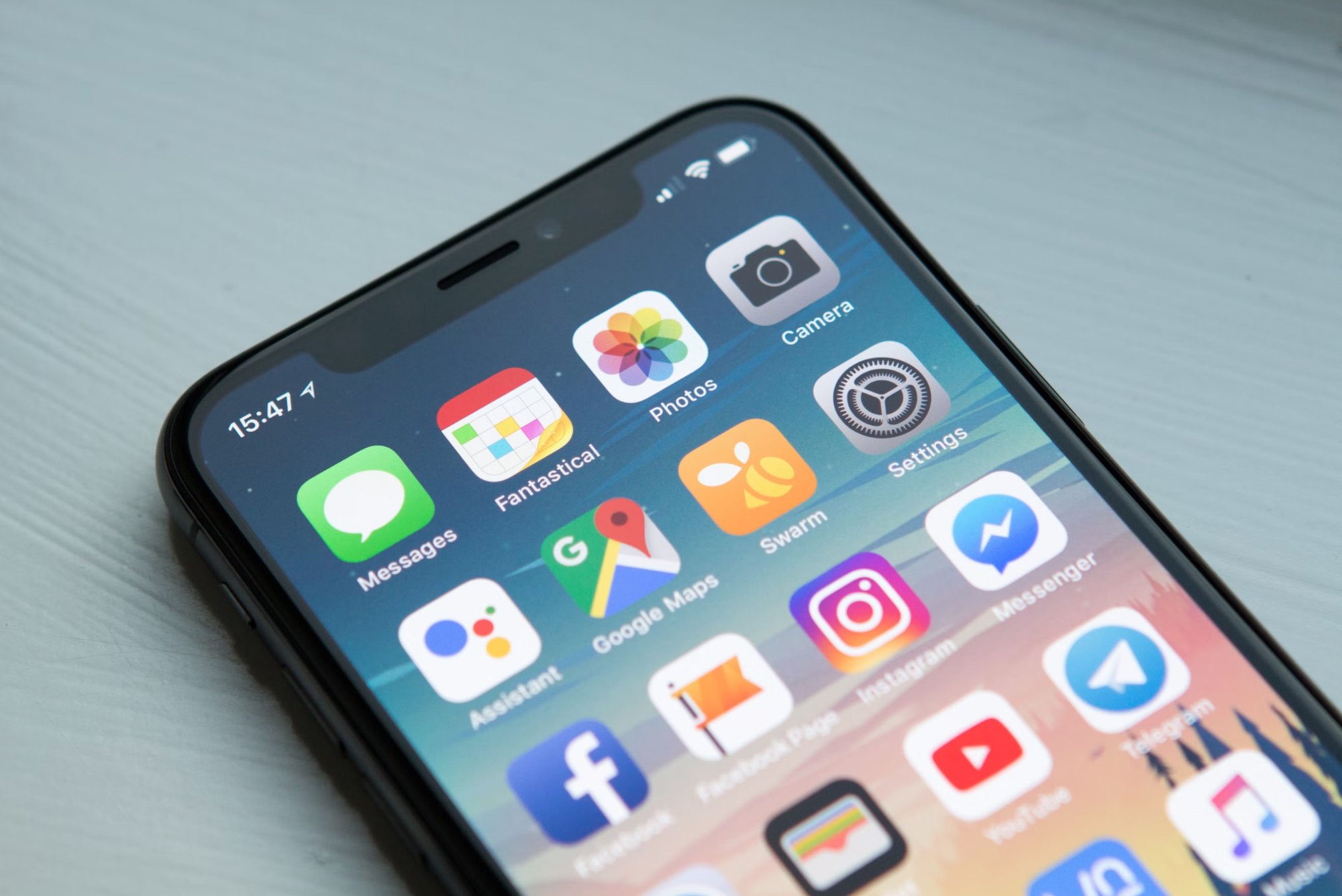
The application as a concept is younger than most people think. The word itself became cultural currency only around 2008, when Apple opened the App Store and handed developers a distribution model that had never existed before. In less than two decades, the app became the organizing unit of digital life. Every problem was solved by downloading something. Every business built a product. Every product had an interface.
That era is ending. Not because apps are being replaced by better apps. Because the premise underneath apps, that humans need a designed surface to interact with software, is being quietly invalidated by a generation of AI systems that can act without being told how to act.
The app was always a workaround. It was the solution to a problem of translation: computers could not understand human intent, so designers built interfaces that translated intent into inputs that computers could process. The button, the menu, the screen, these are not natural. They are the scaffolding of a translation layer between human thought and machine execution. When the translation layer is no longer necessary, the scaffolding comes down.
The app was always a workaround. It was the scaffolding of a translation layer between human thought and machine execution. When the translation layer is no longer necessary, the scaffolding comes down.
What we are beginning to see, in agentic AI systems, in autonomous workflows, in models that can browse, transact, and communicate on behalf of users, is the first serious alternative to the interface paradigm. Not a better app. Not a smarter interface. Something categorically different: software that perceives intent and acts on it without being explicitly navigated.
The implications are structural, not incremental. For businesses, the question is no longer how to build a better product experience. It is how to make your infrastructure legible to systems that will act as intermediaries between your offering and your customer. The consumer interface may not disappear overnight. But the B2B layer, enterprise software, workflow tools, integration platforms, will see the most dramatic compression first. If an AI agent can perform a task that previously required a human to navigate ten screens, the screens become irrelevant.
For investors, the shift reframes what infrastructure means. The value in the application economy was captured at the interface layer, the company that owned the screen owned the relationship. In the agentic economy, the value moves to the layer beneath: the data, the model, the orchestration system, the trust infrastructure. Owning the interface will be worth less. Owning what the agent connects to will be worth more.
For institutions that have built their competitive advantage on proprietary software, the disruption is more acute. Custom-built internal tools, enterprise platforms, and industry-specific applications represent decades of accumulated investment in a paradigm that is being superseded. The question is not whether to act, but how quickly the transition happens and what form the next paradigm takes.
There is an objection that deserves direct engagement. AI development tools, Claude Code, Lovable, Bolt, Cursor, and the generation of products that will follow them, are making it dramatically cheaper and faster to build applications. A solo founder can now ship in a weekend what previously required a team of engineers working for months. If anything, this appears to suggest a coming explosion in the number of apps, not a decline.
The objection is real. The conclusion it implies is wrong.
When the cost of producing something approaches zero, the supply of that thing expands rapidly. That expansion does not signal the health of the category. It signals its commoditization. When anyone can build an application in 48 hours, the application itself ceases to be a competitive advantage. The interface layer becomes a starting point, not a moat. The value question shifts from "do you have an app?" to "what does your app connect to that cannot be replicated just as easily?", which is, again, a question about infrastructure, data, and the model layer beneath.
There is a second dimension to this. The applications being shipped by AI-assisted development tools are structurally different from the applications that defined the App Store era. They tend to be micro-applications, built for a single specific context, often disposable once that context changes. A tool built in a weekend to solve one team's specific workflow problem is not the same category of thing as a durable consumer product with millions of users. The former is actually evidence of the transition already underway: software becoming something you generate on demand rather than something you download and maintain a persistent relationship with.
More apps being created, with less investment and less durability each, is not a contradiction of the thesis. It is the thesis made visible in production numbers.
The death of the app will not look like a collapse. It will look like a proliferation that hollows itself out, more apps created than ever before, each one cheaper to build, each one less essential, each one more quickly replaced. The interface layer becomes abundant and therefore unremarkable. What remains scarce, and therefore valuable, is what the interface connects to.
What replaces the app paradigm is not yet fully formed. But the direction is clear: computing is moving from something you use to something that acts for you. The decade ahead belongs to whoever builds the infrastructure that makes that transition possible, and to whoever is positioned to capture value at the layer the interface used to occupy.
The app had a good run. Its replacement will be quieter, more powerful, and almost entirely invisible.